
A fleet can have well-maintained vehicles, carefully planned routes and experienced managers, but the person behind the wheel still has a major influence on operating costs and risk.
Speeding, harsh braking, rapid acceleration, excessive idling and distracted or fatigued driving can increase fuel consumption, accelerate vehicle wear and raise the likelihood of an incident. For businesses operating commercial vehicles in South Africa, these behaviours can quickly become expensive.
The difficulty is knowing what is actually happening once a vehicle leaves the depot.
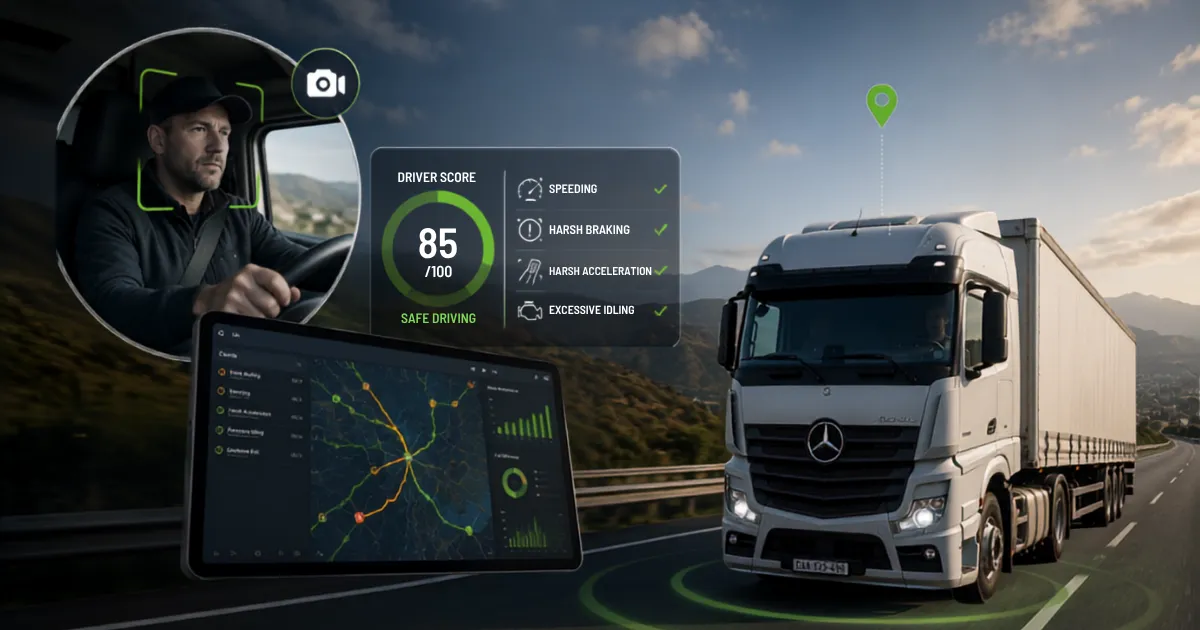
Modern fleet telematics systems give operators that visibility. By combining vehicle data, GPS tracking, driver monitoring and intelligent reporting, telematics can help businesses understand driver behaviour, identify risk and support safer, more efficient driving.
What Is Driver Behaviour Monitoring?
Driver behaviour monitoring uses fleet telematics technology to collect information about how a vehicle is being driven.
Depending on the solution, fleet managers can monitor events such as:
- Speeding
- Harsh acceleration
- Harsh braking
- Excessive engine revving
- Idling
- Route deviations
- Driver fatigue
- Driver distraction
- Unsafe driving events
This changes the conversation around driver performance.
Instead of relying on assumptions, complaints or information gathered after an incident, fleet managers have data that can show where improvements are needed.
For Edge Telematics, the objective is not simply to track vehicles. Driver behaviour information can be combined with technologies such as CANbus integration, Advanced Eco-Drive, dashcams, ADAS, DSM and operational monitoring to create a more complete picture of fleet risk.
1. Identify Risky Driving Behaviour Earlier
One of the biggest advantages of telematics is the ability to identify patterns before they contribute to a serious incident.
A driver who regularly brakes harshly, accelerates aggressively or exceeds speed limits may be increasing risk without necessarily being involved in an accident.
Without telematics, that behaviour can be difficult for management to see.
With driver behaviour monitoring, fleet operators can identify recurring events and determine which drivers, routes or vehicles require attention.
This allows businesses to move from reacting to incidents towards managing the behaviours that can contribute to them.
2. Turn Driver Data into Meaningful Coaching
Simply telling drivers to “drive better” rarely creates lasting change.
Specific information is much more useful.
If telematics data shows that a driver is consistently over-revving the engine, braking harshly or idling excessively, coaching can focus on those behaviours rather than providing generic feedback.
This can make driver training more relevant and measurable.
Fleet managers can establish a baseline, provide coaching and then use subsequent data to see whether performance has improved.
It also means good performance can be recognised. Drivers who consistently demonstrate efficient and safe driving habits can be acknowledged or rewarded, helping create a more positive approach to fleet driver performance management.
3. Encourage More Efficient Driving with Advanced Eco-Drive
Safer driving and fuel-efficient driving often go hand in hand.
Smooth acceleration, controlled engine revs, reduced idling and better anticipation on the road can help reduce unnecessary fuel consumption while placing less strain on the vehicle.
Edge Telematics’ Advanced Eco-Drive solution provides driver scoring and performance information designed to encourage more economical driving.
Instead of fuel efficiency being something only fleet management thinks about at the end of the month, drivers can become active participants in improving it.
Performance scoring can also introduce an element of healthy competition. When drivers can understand their performance and see where they can improve, efficiency becomes a measurable goal rather than an abstract instruction.
4. Use CANbus Data to Understand Vehicle Use
GPS tells you where a vehicle travelled. CANbus integration can provide much deeper insight into what happened while it was moving.
Vehicle data can help fleet managers understand engine and driver behaviour, including factors such as RPM, throttle use and other operational information.
This provides important context.
For example, two vehicles may complete similar routes but return very different fuel consumption figures. Looking at driver and engine data may help explain why.
One driver could be maintaining smoother engine speeds, while another may be accelerating aggressively or operating at unnecessarily high RPM.
This information allows managers to identify inefficiencies based on data rather than guesswork.
5. Detect Fatigue and Distraction with DSM
Some of the most serious fleet risks cannot be identified through GPS data alone.
A vehicle might be travelling at the correct speed and following its planned route, while the driver is becoming fatigued or distracted.
Driver State Monitoring, or DSM, adds another layer of protection by using camera technology to identify potentially dangerous driver behaviour.
This may include signs of fatigue, distraction or mobile phone use.
For fleet operators, particularly those managing trucks, buses and vehicles travelling long distances, this provides valuable additional visibility into what is happening inside the cab.
The earlier a high-risk situation can be identified, the greater the opportunity to intervene.
6. Improve Road Awareness with ADAS
While DSM looks at the driver, Advanced Driver Assistance Systems, or ADAS, focus on risks developing around the vehicle.
Edge Telematics’ dashcam solutions combine ADAS and DSM capabilities to give fleet operators greater insight into both driver and road risk.
Depending on the configuration, ADAS technology can identify situations such as lane departure and potential forward-collision risks.
Combined with video footage, these systems provide useful context around driving events.
Rather than seeing only that harsh braking occurred, for example, management may have supporting information that helps explain what happened immediately before the event.
7. Gain Greater Visibility Through Dashcams
Video can be particularly valuable when investigating incidents.
Traditional telematics might show vehicle speed, location and braking behaviour. A fleet dashcam system adds visual context.
This can help fleet operators review driving incidents, identify risky behaviour and better understand what happened on the road.
It can also make conversations with drivers more objective. Instead of debating different versions of an event, managers have additional information available when reviewing what occurred.
When combined with telematics data, dashcams become more than recording devices. They form part of a broader fleet risk management system.
8. Monitor High-Risk Events in Real Time
The value of fleet data increases significantly when important information reaches the right people quickly.
Edge Telematics’ Operations Control Centre and Vision monitoring solutions can provide another layer of operational oversight by monitoring fleet activity and high-risk events.
This is particularly valuable for larger or more complex transport operations where managers cannot manually monitor every vehicle throughout the day.
Real-time alerts allow operators to focus their attention on exceptions.
Instead of watching hundreds of vehicles moving normally, management teams can concentrate on the situations that require intervention.
9. Reduce More Than Accident Risk
Improving driver behaviour can have benefits across the business.
More controlled driving can contribute to:
- Lower fuel consumption, through reduced idling, harsh acceleration and excessive revving.
- Less vehicle wear, particularly on components affected by aggressive driving.
- Improved safety, by identifying risky behaviour earlier.
- Greater accountability, because driver performance can be measured.
- Better vehicle utilisation, through improved operational visibility.
- More informed training, based on actual performance data.
- Lower fleet risk, by creating a proactive rather than reactive approach.
This is why driver behaviour should not be viewed purely as a safety issue. It is closely connected to fleet operating costs, vehicle performance and overall operational efficiency.
Building a Better Driving Culture
Technology alone cannot create safer drivers.
The real value comes from how the information is used.
A successful driver behaviour programme should combine telematics data with clear expectations, regular feedback, appropriate training and recognition for good performance.
Drivers should understand what is being measured and why it matters.
When the objective is positioned around safer journeys, lower fuel consumption, protecting vehicles and improving overall fleet performance, telematics can become a tool for improvement rather than simply a monitoring system.
Turn Driver Data into Better Fleet Performance
Every journey generates information. The question is whether your business can use it.
Edge Telematics provides customised fleet management and driver monitoring solutions for buses, trucks, vans and specialised fleets. By combining telematics, Advanced Eco-Drive, CANbus data, dashcams, ADAS, DSM and operational monitoring, businesses can gain a clearer understanding of driver performance and fleet risk.
The result is greater visibility into what happens behind the wheel, along with the information needed to coach drivers, improve efficiency and respond to risk sooner.
For South African fleet operators facing pressure to control costs while improving safety and productivity, better driver behaviour can make a meaningful difference.
Analyse. Customise. Optimise.
Discover how Edge Telematics can help you improve driver behaviour, strengthen fleet safety and gain greater control over operational risk.
Connect with us on LinkedIn: https://www.linkedin.com/company/edge-telematics/
Learn more about how you can improve driver behaviour:
https://edgetelematics.com/solutions/advanced-eco-drive/