
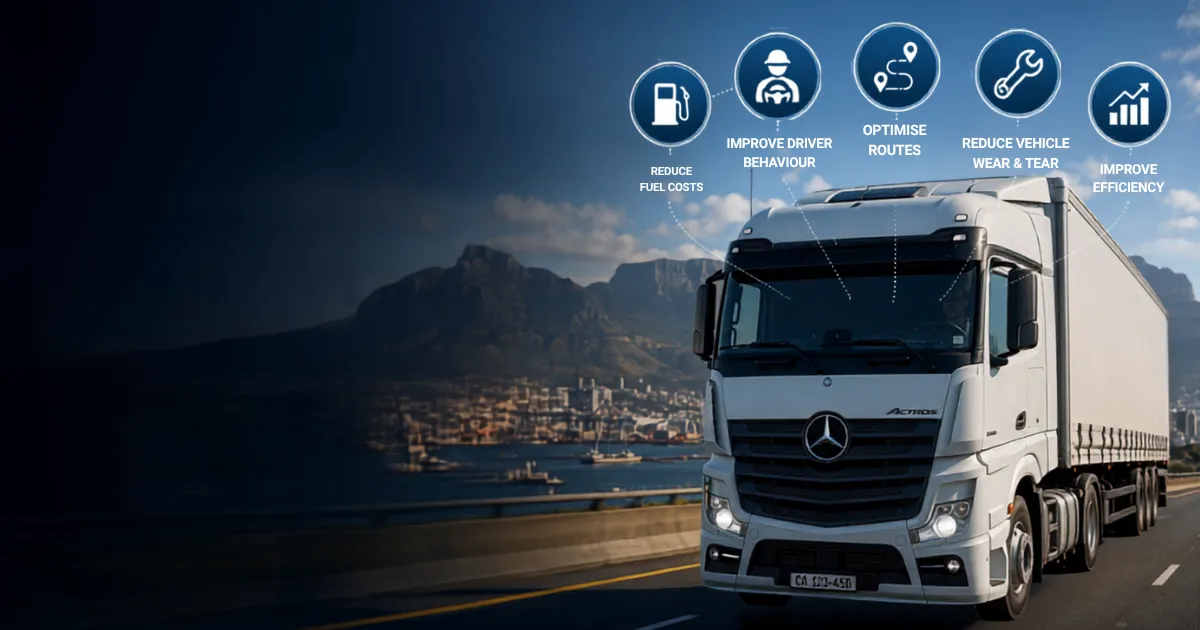
Running a fleet in South Africa is expensive, and controlling those costs is becoming increasingly important.
Fuel prices, vehicle maintenance, driver behaviour, inefficient routes, theft and unplanned downtime can all eat into a fleet’s profitability. For businesses operating dozens, hundreds or even thousands of vehicles, relatively small inefficiencies can quickly become significant expenses.
This is where a modern fleet management system can make a measurable difference.
Rather than simply showing where a vehicle is on a map, fleet management technology gives operators greater visibility into how their vehicles are being used, how drivers are performing and where unnecessary costs are creeping into daily operations.
For South African businesses looking to run leaner, safer and more efficient fleets, that visibility can be extremely valuable.
Key takeaways
- Fleet management systems turn GPS, telematics and vehicle data into decisions that cut waste.
- The biggest savings come from fuel, driver behaviour, routing, maintenance and idling.
- Real time alerts let managers intervene before small issues become costly ones.
- The right solution is customised to your fleet type, not a one size fits all product.
What Is a Fleet Management System?
A fleet management system combines technologies such as GPS vehicle tracking, telematics, vehicle data and real-time reporting to give fleet operators a clearer picture of their operations.
Depending on the fleet and its requirements, this can include monitoring:
- Vehicle locations and movements
- Routes and schedules
- Fuel consumption
- Driver behaviour
- Idling and excessive revving
- Vehicle performance
- Safety incidents
- Refrigerated loads
- Passenger operations
- Operational alerts and exceptions
The important part is what a business does with that information.
Good fleet management is not about collecting more data for the sake of it. It is about turning fleet data into decisions that reduce waste, improve productivity and ultimately lower the total cost of fleet operations.
Reducing Fuel Costs
Fuel is one of the most significant operating expenses for many South African fleets.
While businesses cannot control the price at the pump, they can gain greater control over how fuel is used.
A fleet fuel management system can help identify behaviours and operational issues that increase consumption. These may include excessive idling, harsh acceleration, unnecessary mileage, speeding and inefficient routing.
It can also provide greater visibility into possible fuel theft or irregular fuel usage.
When fuel data is linked to vehicle location, time and driver information, fleet managers have a much clearer picture of where every litre is going.
For a large fleet, even a modest improvement in average fuel consumption can add up to meaningful savings over the course of a year.
Related solutionFuel ManagementProbes, CANbus integration and fleet card connectivity to reduce costs and prevent theft.Improving Driver Behaviour
How a vehicle is driven has a direct impact on its running costs.
Harsh acceleration, excessive braking, speeding, unnecessary idling and poor gear selection can increase fuel consumption and place additional strain on components.
Modern fleet telematics solutions allow fleet managers to monitor driving behaviour and identify patterns that require attention.
Instead of relying on assumptions, operators can use actual vehicle data to support driver training and performance management.
Better driving habits can contribute to lower fuel consumption, reduced wear and tear and safer fleet operations.
It also gives managers the opportunity to recognise drivers who consistently operate vehicles efficiently.
Related solutionAdvanced Eco DriveMonitor and coach driving behaviour to improve fuel efficiency and safety.Planning Smarter Routes
An inefficient route costs more than time.
Every unnecessary kilometre means additional fuel, vehicle wear and driver hours. For passenger transport operators, poor routing and scheduling can also affect service delivery and on-time performance.
Fleet routing and scheduling software can help businesses plan operations more effectively using accurate fleet information.
This is particularly important for complex transport environments where multiple vehicles, routes, drivers and schedules need to work together.
Better route planning can help businesses reduce unnecessary mileage, improve vehicle utilisation and make more productive use of the fleet they already have.
Related solutionEdgeBus Routing & SchedulingOptimise routes and schedules for commuter, long distance and fixed route bus services.Reducing Vehicle Wear and Maintenance Costs
Vehicles that are driven poorly or used inefficiently are likely to require more maintenance.
The cost is not limited to the repair itself. A vehicle sitting in a workshop may also mean missed deliveries, replacement vehicles, disrupted routes and lost productivity.
Fleet management technology gives businesses access to operational data that can highlight potentially costly driving patterns before they become part of everyday fleet behaviour.
By combining vehicle information with driver performance and usage data, managers can take a more informed approach to fleet maintenance and vehicle lifecycle management.
The objective is simple, keep vehicles productive for longer and reduce avoidable costs.
Cutting Down on Unnecessary Idling
A stationary vehicle with its engine running is still costing the business money.
In large commercial fleets, a few minutes of unnecessary idling across multiple vehicles and drivers can become hundreds of wasted hours over time.
Telematics allows businesses to identify when, where and how frequently excessive idling occurs.
Once managers have this information, they can investigate the reasons behind it and address the behaviour through operational changes or driver coaching.
It is a relatively simple area to measure, but one that can deliver ongoing savings.
Giving Fleet Managers Real-Time Visibility
Some of the biggest fleet costs come from problems that are discovered too late.
Real-time fleet monitoring changes that.
Instead of waiting for reports at the end of the week or month, fleet managers can receive alerts when important events happen. Depending on the solution, this could include risky driving, route deviations, fuel irregularities or other operational exceptions.
An Operations Control Centre can add another layer of visibility by helping operators monitor fleet activity and respond to high-risk incidents as they happen.
Faster information means faster intervention, which can prevent a relatively small operational issue from becoming a much more expensive one.
Related solutionControl Room24/7 monitoring of fleet activity with rapid response to high risk incidents.Using Data to Make Better Fleet Decisions
One of the less obvious benefits of fleet management technology is the quality of information it gives management.
- Should a route be changed?
- Is one vehicle costing significantly more to operate than another?
- Which drivers consistently use more fuel?
- Are vehicles being utilised efficiently?
- Where are the recurring exceptions?
Without accurate data, these decisions can become guesswork.
With fleet analytics and real-time reporting, businesses can identify trends, compare performance and make decisions based on what is actually happening across their operations.
Over time, this can influence everything from driver training and route planning to vehicle replacement and fleet size.
The Right Fleet Management Solution Should Fit Your Operation
Not every fleet operates in the same way.
A bus operator has very different requirements from a refrigerated transport company. A logistics fleet may prioritise fuel efficiency, routing and driver safety, while a passenger transport business may also require scheduling, passenger counting and operational compliance.
That is why fleet management technology should not be approached as a generic, one-size-fits-all product.
Edge Telematics works with businesses to analyse their requirements and customise solutions around their specific operational challenges. From fleet management and fuel monitoring to routing and scheduling, driver monitoring, cold chain management and operational control, the goal is to turn fleet information into practical improvements.
Turn Fleet Data Into Lower Operating Costs
Reducing fleet costs does not necessarily mean reducing vehicles, routes or service levels. Often, the opportunity lies in making existing operations work more efficiently.
Greater visibility can reveal where fuel is being wasted, where routes can improve, where driver behaviour is increasing costs and where operational risks need attention.
For South African fleet operators facing continued pressure on margins, a smarter approach to fleet management can turn everyday operational data into meaningful savings.
Analyse. Customise. Optimise.
Discover how Edge Telematics can help you gain greater visibility and control across your fleet.